Religious Cult | UNIVERSITY ISLAMIC CENTRE
» ARTICLE » Religious Cult

Religious Cult

The definition of cult according to the Dewan Bahasa dan Pustaka Dictionary refers to a system of worship in religious ceremonies. However, if the cult is associated with religion, it carries a different dimension of meaning, namely the phenomenon where individuals or groups give excessive worship to certain leaders, teachings, or organizations, causing deviations from the principles of true religion. In this context, the verse of Allah SWT in surah al-Ikhlas is an affirmation that nothing is worthy of worship except Allah SWT:

to be loved
Image source: https://harianmetro
Screenshot 2025-05-16 at 15.09.58

Meaning: “ Say (O Muhammad): (My Lord) is Allah, the One. Allah is the focus of all creation for any need. He begets no son, nor is He begotten. And there is none like unto Him. ”


The phenomenon of religious cultism has occurred in various cultures and religious traditions, and the Muslim community is also not immune to this influence. It often occurs when a person or group is praised excessively to the point of being considered infallible or having extraordinary powers. This phenomenon can lead to the distortion of faith, social division, and the destruction of religious values.

A08 02
Image source: ai generated images

Causes of Religious Cults

Religious cultization does not happen suddenly but rather it is a long process to plant the seeds of fanaticism in society. And this phenomenon continues to develop through a combination of several factors such as social, psychological, and religious which are easy to influence its followers. Here are five factors that trigger religious cultization among society:

1. Charismatic Leaders These leaders are often perceived as 'special' or possessing extraordinary power, making followers overly dependent on them. Leaders who possess charisma often use this trait to form a cult of worship around them, claiming to have spiritual advantages or secret knowledge.

2. Lack of knowledge and religious understanding Many cult followers come from backgrounds that lack a deep understanding of true religious teachings. This lack of knowledge causes them to easily accept deviant teachings without questioning them. Individuals who lack an understanding of the principles of monotheism and true Islamic teachings are easily influenced by leaders who portray themselves as special or chosen by God.

3. Life stress Situations of economic, social, or political instability make individuals vulnerable to cult influence. Jim Jones, for example, offered a 'safe' and 'just' community to his followers who were desperate for stability in their lives.


4. Emotional manipulation and fear Followers are often forced to believe that leaving the group will lead to disaster or destruction. Cult leaders often use emotional manipulation, threats, or false promises to ensure followers' absolute obedience.

5. Community Isolation Isolation of followers from the outside world is a key strategy to ensure their continued dependence on the cult. Followers are prohibited from interacting with outside individuals or receiving alternative information that could challenge their thinking.


A08 05
Image source: https://www.utusan.com.my

This religious cult phenomenon is dangerous:

a. Obsessed with individuals: Followers consider their leaders to be infallible and unquestionable.

b. Deviating from Islamic teachings: The teachings brought may conflict with the principle of monotheism in Islam.

c. Exploitation of followers: There are cases where leaders of heretical teachings take advantage of them financially, sexually, or in terms of power.

A08 04
Image source: heresy drama

Heretical Teachings

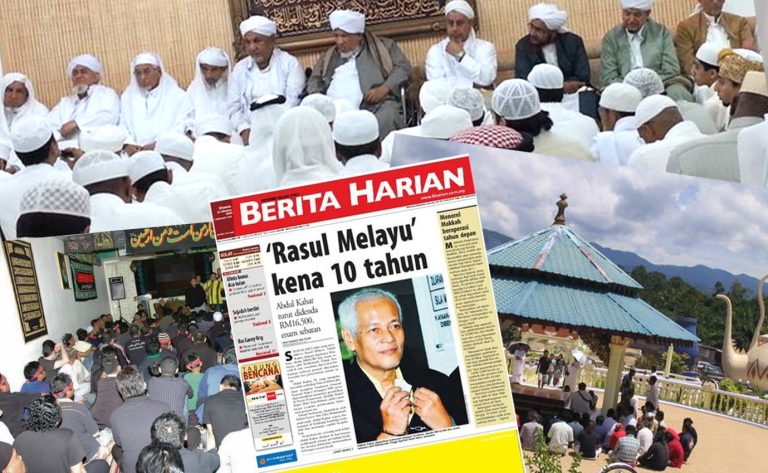
According to JAKIM, there are over 100 heretical teachings that have been identified in Malaysia. The following are the characteristics of heretical teachings related to religious cults and heretical teachings in Malaysia:

Screenshot 2025-05-16 at 15.18.11
Screenshot 2025-05-16 at 15.18.52
haram
Image source: beritaharianonline/ sokmodotnet/utusanmalaysia

The issue of heretical teachings that is difficult to contain and re-emerges after action is taken stems from elements of cultism that worship religious leaders or figures they believe in to the point of going beyond limits. The action to overcome this problem is to eliminate the root, which is cultism that deifies religious leaders beyond the level taught in the Quran and Sunnah until it finally makes their minds function by only following what is wrong and deviant.

In conclusion, the cultization of religion and heretical teachings can threaten the harmony and stability of the Muslim community in Malaysia. Therefore, it is important for the community to be sensitive and return to adhering firmly to the Quran and Sunnah.

Date of Input: 03/07/2025 | Updated: 03/07/2025 | asmunir

MEDIA SHARING

UNIVERSITY ISLAMIC CENTRE
Universiti Putra Malaysia
43400 UPM Serdang
Selangor Darul Ehsan
0397698588
0397693640
X, (10:52:40pm-10:57:40pm, 13 May 2026)   [*LIVETIMESTAMP*]