



HOUSEHOLD CONFLICT RESOLUTION COURT | UNIVERSITY ISLAMIC CENTRE
» ARTICLE » HOUSEHOLD CONFLICT RESOLUTION COURT

HOUSEHOLD CONFLICT RESOLUTION COURT

MARRIAGE  is one of the longest and most important phases in most people's lives. Many of them are happy in sowing the seeds of life.

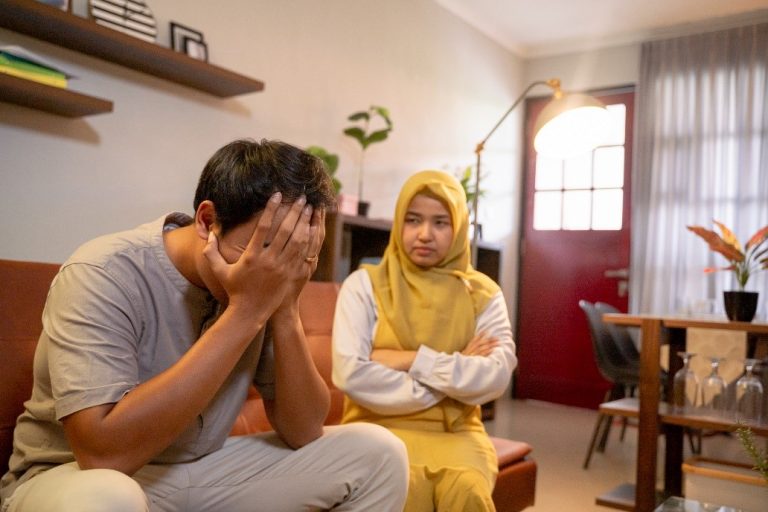
No less are those who live as if in 'hell'.  Shiqaq;  as interpreted through the Rules of Hakam (Selangor State) 2014, prolonged fights between husband and wife that affect domestic harmony have occurred either since the beginning of the marriage bond, or even after passing the happy phase.

Like a Malay proverb,

"It's supposed to be hot until the evening, it's supposed to rain in the afternoon".

Often we hear from the husband's perspective in a divorce claim, he still loves and needs his wife too much so he is not willing to pronounce  Talaq . While  Talaq  is the right and authority of the husband.

Similarly, the wife wants to free herself from the bond immediately and is even willing to run away to the family home or a secret place that the husband does not know.

This scenario means that there is a possibility of  darar syarie  (harm recognized by Syarak);  as interpreted through the Hakam method as well, which is the danger that touches the wife regarding religion, life, body, mind, dignity or property according to the custom recognized by Hukum Syarak.

hakam2
In this situation, none of the objectives of marriage can be realized even both of them; whether husband or wife, fail to taste the blessings of marriage no matter who is the cause.

Because there is no agreement to end the conflict well, the hanging issue is not tied. Based on statistical findings that is before the existence of the Hakam method (2007-2013), the number of divorce cases filed under Section 47 that are overdue for more than three years from the date of registration, that is for four to eight years or more, reached an average of 500 cases each year.

A few years before, even in the mid-1990s, the Selangor Syariah Court was faced with attacks and criticism from various parties over the issue of delaying cases for too long, among them cases involving the issue of divorce and nusyuz in the case of Aida Melly Tan Mutalib [2008]1 ShLR 85.

Islamic law came to offer a solution to end this ongoing conflict, with the assurance of God.

Allah says in Surah An-Nisa', verse 35 which means;

"And if you are worried about the division between the two of them (husband and wife) then appoint a "middle man" (to reconcile them, that is), one from the male family and one from the female family. If the two "middlemen" (sincerely) aim to reconcile, surely God will make both (husband and wife) dress well. Indeed, Allah is always Knowing, and His knowledge is very deep."

Based on the verse, the role and function of Hakam is very great, even noble in terms of Sharia. The main spirit in the implementation of Hakam is reconciliation.

However, in order to bring the spirit that Islam is a solution to the problems of the community within the framework of siyasah syar'iyyah, through the enforcement of the Hakam method, the Hakam can be authorized by the Court to end the conflict through  Talaq  or  Khul' , if reconciliation cannot be achieved, and at the same time resolve the domestic conflict double edged either by way of reconciliation or separation.

Hakam as interpreted in the hakam method is an arbitrator who is authorized by the parties or by the Court to resolve a fight ( shiqaq ) between husband and

hakam3
Therefore, the appointment of a Hakam in a divorce case needs to be done neatly and thoroughly.

Before the existence of the Hakam method, the Selangor Syariah Court was only guided by the provisions of Section 48 of the Enactment of Islamic Family Law (State of Selangor) 2003 (EUUKIS) and the Practice Directive 2006 which did not have a support system for the appointment of Hakam.

Section 48 EUUKIS only mentions that if the Court is satisfied that a fight ( shiqaq ) always occurs between the parties to a marriage, the Court may appoint, according to Hukum Syarak, two arbitrators or Hakam to act on behalf of the husband and wife in question respectively ; while the 2006 Practice Directive provides guidance to Judges to appoint Judges who have knowledge in Syara Law'.

But there is a lack of certain mechanisms that can filter those who are qualified to carry out this function.

Likewise, there is no clear work process on how Hakam can be implemented.

As a result, the Hakam appointed are among the Sharia Officers of the Selangor Syariah Justice Department and Islamic Affairs Officers of the Selangor Department of Islamic Religion who have their respective essential tasks and are forced to undertake various tasks at one time which makes it difficult to commit to handling Hakam proceedings.

After the hakam method was enacted and enforced, the function of the hakam has been empowered. Reconciliation efforts are more constructive and give the husband the opportunity to try to save the household.

At the same time, there is no more delay in resolving divorce cases because the proceedings have been accelerated with the intervention of Hakam who is fully empowered by the Hakim.

Date of Input: 03/09/2024 | Updated: 03/09/2024 | asmunir

MEDIA SHARING

UNIVERSITY ISLAMIC CENTRE
Universiti Putra Malaysia
43400 UPM Serdang
Selangor Darul Ehsan
0397698588
0397693640
F, (10:03:31pm-10:08:31pm, 20 Mar 2026)   [*LIVETIMESTAMP*]