



WHY DO YOU GO ASTRAY AFTER REPENTNING? | UNIVERSITY ISLAMIC CENTRE
» ARTICLE » WHY DO YOU GO ASTRAY AFTER REPENTNING?

WHY DO YOU GO ASTRAY AFTER REPENTNING?

Repentance means returning from what is despicable in the Sharak to what is praiseworthy in His sight. In another meaning, repentance is returning to Allah SWT and obedience to Him after committing immorality or sin, such as being trapped in deviant teachings or being called
heretical teachings.

It is related to regret and self-reflection so that past mistakes are not repeated in the future. In the Koran, there are a number of verses regarding the urge for humans to repent to Allah SWT and linking it with glory in this world and the hereafter. Among them are the words of Allah SWT in surah al-Tahrim, verse 8:

It means: " O you who believe, repent to Allah with nasuhaa repentance (pure repentance). Hopefully your Rabb will cover your mistakes and admit you to Jannah beneath which rivers flow . "

Ibn Kathir said: That is true repentance with full determination, which can erase various evils that have existed before, which will unite and gather those who repent, and also restrain themselves from various despicable actions.
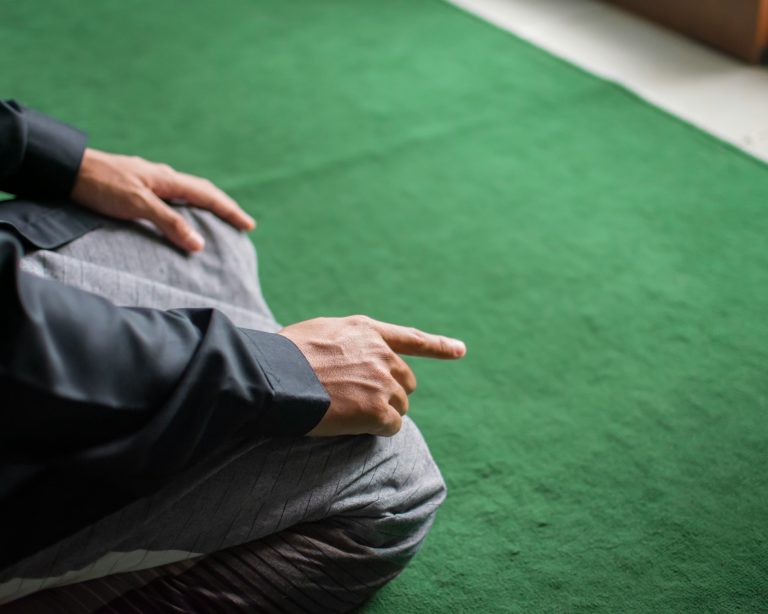

Pogung Dalangan Mosque 9 udUYf0bbM unsplash

While istitabah is a recommendation or process that provides an opportunity to repent for those who make mistakes from a spiritual perspective. Apart from that, the istitabah approach carried out is in the form of discussions and solemn religious advice to the applicant to re-accept Islam as a religion in life.

Likewise, in a hadith narrated by Aisyah R. Anha, the Prophet SAW said:

It means :  "Indeed, a servant, if he admits his sins and then repents, surely Allah SWT will accept his repentance." (HR al-Bukhari)

Mulla Ali al-Qari in  Mirqat al-Mafatih  said: If someone realizes that he is in a sinful state, then he repents by fulfilling all the pillars and conditions such as regretting, abandoning it, making a decision and trying to improve himself, then Allah SWT will accept his repentance based on the word. -His:

Meaning :  And He is God who accepts repentance from His servants (who repent). (al-Shura :25)

Islam has prepared a perfect way of life for its servants so that if they have gone astray or deviated from the path of truth, they are shown a way out so they can return to the path of truth.

QhzQfD0ihnI freshmen mosque unsplash

Why are there still some of those who have repented from among the followers or leaders of heretical teachings who are found to be returning to practicing these deviant teachings?

In a hadith narrated by Abu Sa`id al-Khudri, he said: The Prophet SAW said which meant:

There was a man from among the previous Ummah who had killed 99 people. Then he asked about the person who knew best on earth. Then he was shown to a monk (religious person). Then he went to the monk and said that he had killed 99 people, was he still worthy of repentance? So the monk answered: "No!" Then the man killed him until there were 100 people.

Then he asked again about the person who knew best on earth. So he was shown to a man of knowledge. Then he mentioned that he had killed 100 people, was he still worthy of repentance? The knowledgeable man said: "Yes, what is between it and repentance? Go to such and such a place. There are groups of people there who worship Allah, so worship with them. Don't go back to your place because it is a bad place."

He went to the place mentioned until halfway through the road, the angel of death came (took his life). There is a dispute between the angel of mercy and the angel of punishment. The angel of mercy said: "He came here in a state of repentance, he has inclined his heart to Allah." The angel of doom also said: "He hasn't done any good deeds yet." Then there came to them an angel in human form. Then he was in the midst of them, and said: “Measure between these two earths. Whichever is closer is his."

They measured him and found that the man was closer to where he wanted to go. Then the angel of mercy held him. (HR Muslim)

image04 1

Among the factors that cause a person to return to heretical teachings after repenting and undergoing the process of istitabah are:

  1. The teaching that can be taken from the hadith above is for example, if the man is asked to emigrate to another place so that he does not repeat the action he has committed if he is still returning or is in the same place due to the influence or invitation from friends or the surrounding atmosphere which may encourage him. to do the same thing.
  2. In issues related to heretical teachings, if we look at past cases, only the leader or a few followers are asked to repent and follow the isitabah process while other followers still continue to adhere to these heretical teachings which causes them to try to influence other friends to return to these teachings.
  3. The most important thing here is the person who repents, if he really wants to repent then he should regret not going back, severing ties with those who still practice these teachings, keeping himself busy with the recitations in the mosque and surau, side by side. with knowledgeable people, especially those who have knowledge as well as practicing the Islamic way of life in the true sense of the word and are determined not to return to the old teachings.
  4. If a heretical teaching has persisted in the soul for a long period of time, it is not easy for those who repent and undergo the process of isitabah to actually come out and abandon that teaching, for example people who have taken the drug for a long period of time even though they have been admitted to the center. recovery, but if they leave, there are still those who will look for more, especially if it is given to them by the friends involved, that is the situation in the hadith history above.
  5. There are also among the followers of a teaching who consider that if they are arrested and asked to repent and undergo the process of istitabah , they consider this to be a test and trial that they have accepted, but their hearts still hold firmly to the heretical teaching they adhere to.
  6. There are those among them who actually aim to collect ringgit money in an easy way when facing a group of heretical teachings and if they repent and abandon these teachings, they will lose all the blessings and luxuries that they have accumulated so far, causing them to return to these heretical teachings.

This is the scenario that applies around us if someone who has once recited repentance is arrested again after several years because he has returned to following old teachings, even though he is still a reference in these heretical teachings.

20090810Kosmo01 FROM SOCIAL
Image source: kosmo

In fact, the approach is different and requires a more detailed study to reassess those who have undergone the istitabah process by reviewing whether the approach used is appropriate? Is there a sufficient period of time for Istitabah? This needs to be thought about so that it can help them to avoid continuing with the heretical teachings they once adhered to. Wallahu A'lam

Date of Input: 13/08/2024 | Updated: 13/08/2024 | asmunir

MEDIA SHARING

UNIVERSITY ISLAMIC CENTRE
Universiti Putra Malaysia
43400 UPM Serdang
Selangor Darul Ehsan
0397698588
0397693640
F, (09:30:37pm-09:35:37pm, 22 Mar 2026)   [*LIVETIMESTAMP*]